History / Timeline
-
What follows is a loose timeline of sorts, enough to get a feel for where Goðrún was or could have been at varying points throughout history, but not so much as to really shackle anyone's hands. As always, information here is meant to inspire, not constrain. Images are linked to larger images.
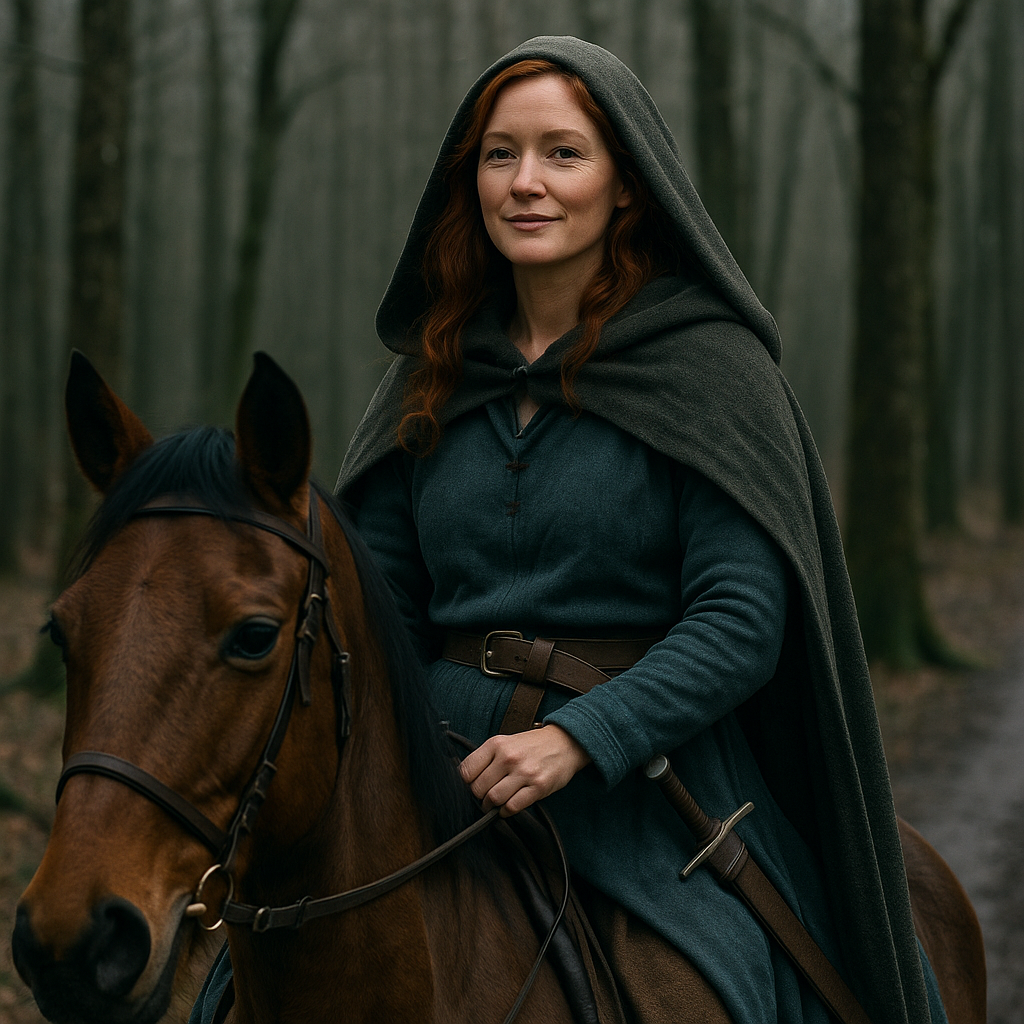
Growing up, Goðrún's village was one of the last in Iceland to resist the wave of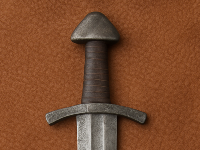 Christianity that was sweeping through the Nordic peoples thanks to Kóngur (King) Olaf I Tryggvason's forcing it on his people shortly after ascending to the throne in the wake of the death of Kóngur Haakon the Great in 995 C.E. As such, when she first died in 1113 C.E., it was in a pitched battle in the civil war that raged across Iceland ever since Kóngur Tryggvason ascended the throne, and continued after for decades more. When she came back to life it was seen as a sign from the gods, to not give in to the false teachings of the single deity. Her village was decimated almost thirty years later, with her being one of the only survivors.
The next couple-few centuries were spent wandering the Saxon lands, often as a sellsword, what centuries later would be called a mercenary. If a war needed fighting, a wagon protecting, or nearly anything else that could use a woman with strength and skill, her services were on offer. Being a member of a "savage people", and woman to boot, she had to constantly prove herself, and she died quite a few more times until she found her first teacher, Rebecca, sometime in the Fourteenth Century. Rebecca taught her there was more than violence, more than eking out a living, more than mourning a past that could never be again. Rebecca taught her to find beauty and joy in every circumstance, in every encounter, and to remember that immortality didn't bring omniscience. It didn't bring anything but a longer life, and a constant threat of violence. That made it all the more imperative to not forget to find happiness wherever, whenever, and with whoever, one could.
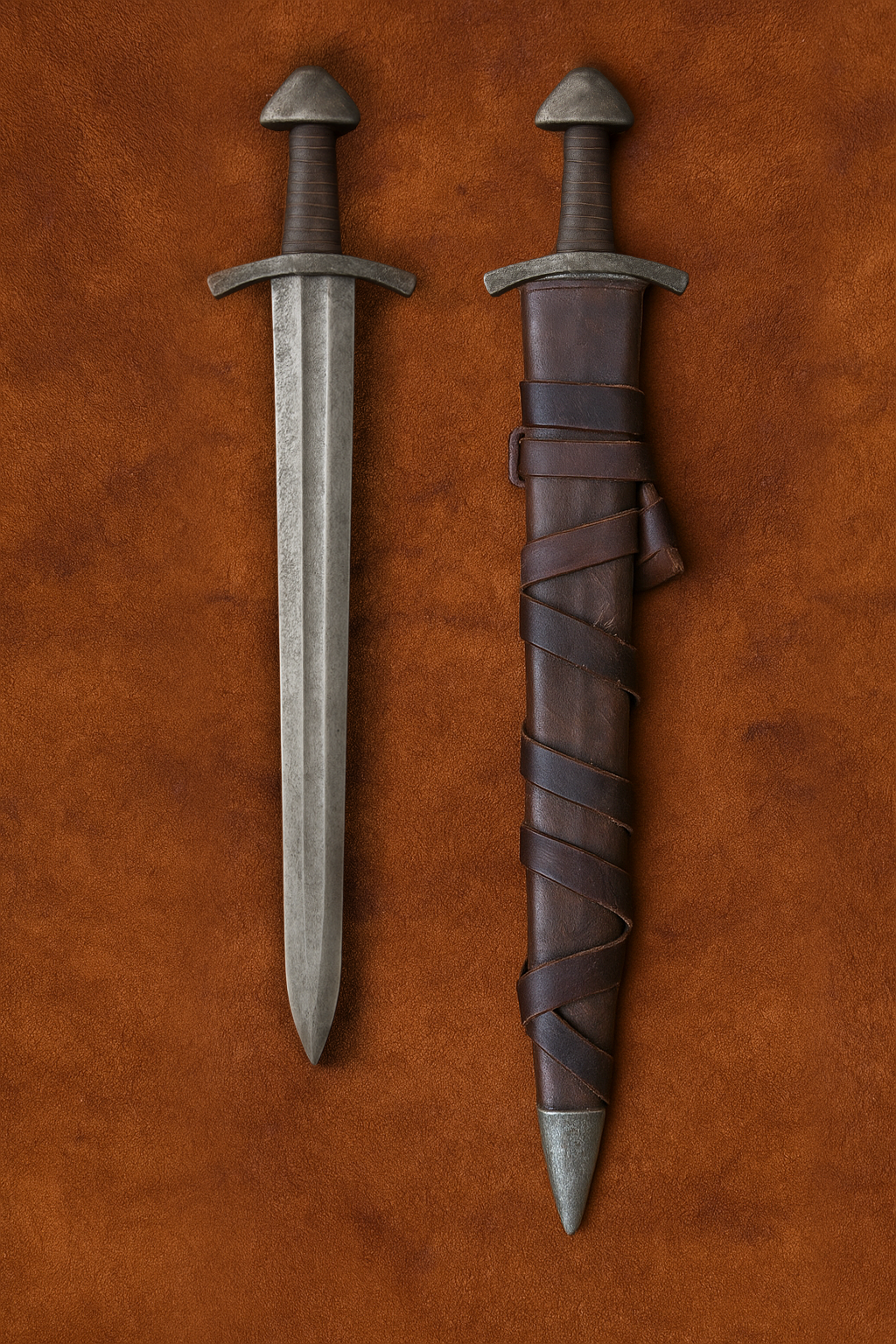
Early in the Seventeenth Century, she traveled through Mongolia, to hunt for a famed master of the fighting arts, a master who had fought hundreds of Imperial warriors without dying once--and that master was an unassuming woman named Mei-Lin Cheng. Mei-Lin taught her Tàijí Quán, itself both an external form of combat that relied on no weapons nor strength, but, more, a method of introspection and guiding oneself, a way to train oneself and a form of meditation. Much like Rebecca before, Mei-Lin opened Goðrún's eyes to things she hadn't even conceived of before. She spent quite a few decades traveling with Mei-Lin, until Mei-Lin said she had nothing more to teach Goðrún, and gave her a sword, Late-Ming Dynasty Tàijí Quán jiàn. They spent another decade or so traveling together not as master and student, but as lovers.
In the Eighteenth Century, traveling through France, she took her first official pupil in Versailles, Jean-Philippe de Lefayé III, the son of a nobleman. His first death had occurred not long before Goðrún arrived, and she agreed to train him. She tried to teach him what Rebecca and Mei-Lin had taught her, but he had the arrogance of youth, the confidence in indestructibility from youth and immortality, and the careless disregard for the lower classes from his noble birth. It was, then, not surprising that he challenged the next immortal he came across, heedless of Goðrún's attempt at respectful protests. Jean-Philippe fought the man the very next morning--until the other immortal tired of toying with the youth. Before Jean-Philippe could react, he'd been slashed across the stomach and doubled over. As Goðrún was running up to try and stop the fight, the elder immortal took Jean-Philippe's head.
Just past the turn of the Nineteenth Century she ended up in America, having spent first some time in Boston and Philadelphia, watching Americans build their nation, and she was one of a few immortals who witnessed the signing of the Declaration of Independence. The formation of a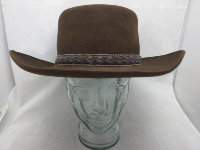 nation wasn't something one witnessed every century, after all, so it drew immortals. Most of the century was spent out West, from Kansas to Wyoming to California to Mexico. It was, in a way, a lot like England of a few centuries previous, though most she met didn't want to really believe that. Decades later, she would never understand how the "Old West" got a reputation for lawlessness and bloodshed and chaos; at the time all she saw were people trying their best to live their lives, to carve out more than mere existence. It was nice to see, and nice to be a part of, even if she kept herself to the periphery. The next century was spent watching America grow and prosper, become not just a world power, but a world leader. That which America did, others did soon after. That which America touted as good and right was touted as such by other nations soon after. It not only took its place on the world stage, it did its best to lead.
At the turn of the millennium, Iceland was rocked by two earthquakes. Though they were severe and people were injured as well as structures damaged, no one was killed. It made her realize how long it had been since he'd seen her home land, and she couldn't help but return. She'd visited before, since she first left so many centuries previous, but it was time to go back to stay, at least for a while. Besides, it was nice to be able to use her birth name again; she hadn't been able to do that for a good few centuries. After attending the University of Iceland for a few years, she transferred to the University of Oslo in Norway, earning degrees in history and art, and from there she managed to be hired by the Museum of Cultural History branch of the university as an assistant conservator. They dealt with ancient Nordic artefacts that were found and brought in, cleaning and cataloguing them, trying to figure out their place in history. As an assistant, she did more of the scut work--running artefacts here and there, chasing down people or information, but it was actually fun. She'd been there for some of the history they were working with, so it was interesting to see what people of the modern era thought--and she couldn't resist "nudging" toward right answers for particularly problematic pieces.
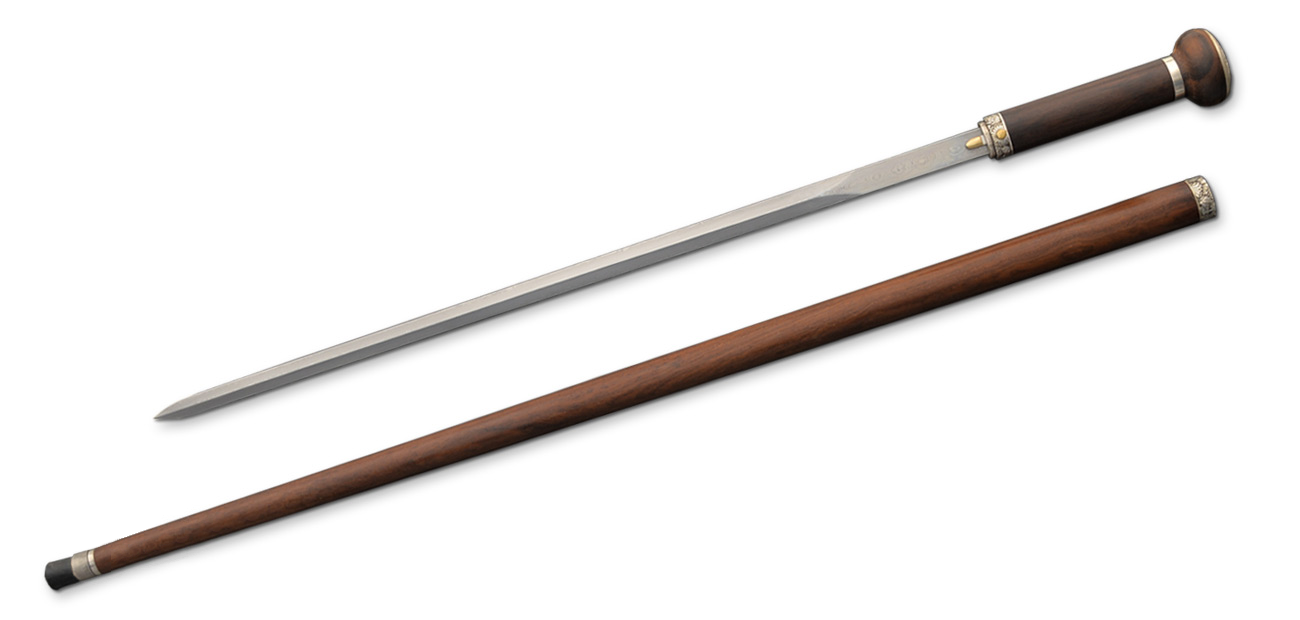
Throughout the centuries, she'd fought; she'd taken some heads and refused others; hers had been nearly taken more than once. That was the one constant in her immortal life; no matter what era she was in, the culture in which she moved--her safety was never guaranteed.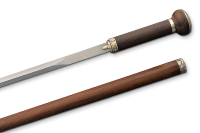 There were the usual threats a woman faced throughout history, but more than that were the other immortals. Other immortals knew to not underestimate her. They knew that a woman was no less dangerous than a man, especially one who had survived centuries. She had to find ways to keep a sword nearby, and not long after she became an assistant conservator, she was gifted with a cane-sword by an old friend. As it was about the only way she could be close to a sword anymore, she kept it in her office, keeping her "primary" sword at home. Still, she'd managed to at least have it nearby for much of her day, and to date it has saved her life a good few times.