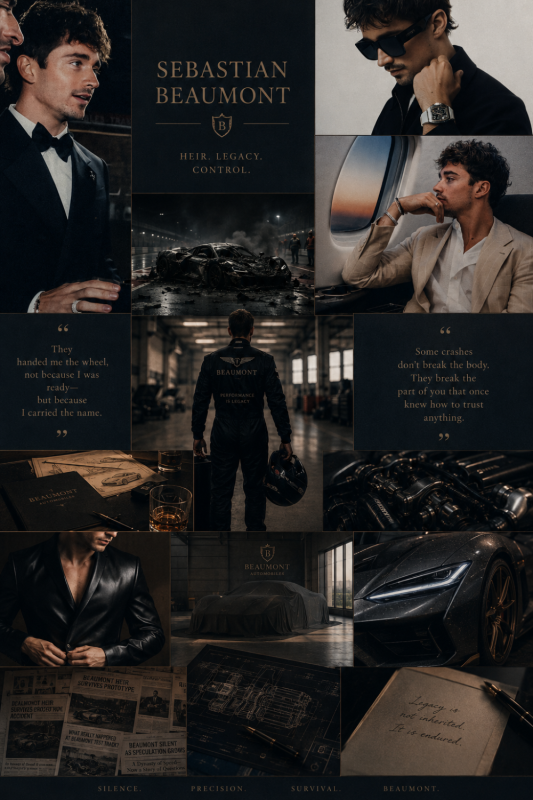
LIKE A TEST
-


Being born into one of the most influential hypercar dynasties — the golden heir of a visionary CEO and a careful brand architect. The family company being founded by his father, producing limited-production hypercars known for their enormous precision and brutal elegance. Every vehicle carrying the weight of legacy — and one day, it will all be his. Growing up not in ordinary spaces of childhood, but in glass-walled boardrooms, private test tracks, and engineering halls where every conversation carried weight. Being trained, observed, and refined into the public face of continuity. A future CEO in waiting, not because he demanded it, but because it was already decided.
Being in his teens, when becoming what the company needed him to be — composed, articulate, and exceptionally controlled in presence. Media training beginning early, internships following without question, and his name quietly starting appearing in internal discussions about succession and leadership.
At 22, everything fractured. During a critical stage in the development of a red-flagged hypercar prototype, internal pressure within the company reached a breaking point. The vehicle had shown concerning inconsistencies during testing — serious enough that parts of the engineering team hesitated to continue validation runs. At the same time, internal whistleblower concerns began circulating, raising questions about whether safety warnings were being properly acknowledged or suppressed in the race toward launch. Originally not being meant to be involved in the final validation phase. As hesitation spread through the testing team and confidence fractured, management turned to the one who could not easily be questioned: the heir himself. Someone whose involvement would signal trust, control, and continuity. The request was not framed as enforcement, but as a necessity. A symbolic step to prevent uncertainty from growing further. Seeing the red flags. Understanding the hesitation within the team. And yet, in a system where refusal would worsen the chaos, he did not say no. The decision placed him behind the wheel of the prototype for what was presented as a controlled final validation drive. Once in action, the flaw the engineers couldn’t fully pin down showed up in the real world, turning a controlled test into a total disaster. The crash was brutal. The prototype was destroyed, and he nearly lost his life. Public statements being kept vague and carefully worded, calling it a “testing accident,” while all the real details stayed hidden behind legal and company protection. What actually led up to it — engineers raising concerns, hesitation inside the team, and the growing pressure before the test— was never fully explained, which left a gap that quickly turned into rumors and speculation. The golden heir survived with physical injuries that eventually healed, but the mental impact never really went away. Most noticeably, developing a strong, automatic panic response whenever he’s behind the wheel. Driving now feels like something his body rejects before he can even think it through. Even when he tries to push through it, he can freeze or panic — especially if there are passengers in the car and he feels responsible for them. The company staying silent about what really happened, and his absence from anything car-related only made people more curious. To the public, it’s still a half-explained prototype accident involving the heir. Becoming something of a mystery figure. The Beaumonts have become the subject of constant speculation. The company’s silence and carefully controlled statements have only fueled the belief that there is more to the incident than what was made public. People question what really happened during that test, why details were withheld, and what role internal pressure may have played. Over time, the Beaumont name has become tied to unanswered questions, with the golden heir himself at the center of a story everyone knows, but no one fully understands.
At 26, remaining calm, soft-spoken, and composed in almost every situation, rarely raising his voice or showing visible frustration. On the surface, still fitting the image of the polished heir — polite, attentive, and respectful toward everyone regardless of status, from executives to staff. Feeling deeply, but those emotions rarely show directly anymore — they come out in silence, distance, or quiet withdrawal rather than open expression. Anger becomes silence, sadness becomes distance, jealousy becomes coldness. If he’s hurt, he withdraws instead of lashing out. Flinching over loud sudden noises; still hearing the car crash in his head. It’s still a part of his nightmares, mentally playing that night over and over.
-
Aesthetics
-