
Origin Story
-
The Time Before
Long before Amarantha ever darkened Prythian, the Summer Court stood as something vibrant and unbroken. It was alive in a way few places were. It was a Court shaped by tide and sunlight, where the air carried salt and warmth in equal measure, and the horizon seemed to promise something endless rather than uncertain. Life moved easily there. Markets thrived, ships came and went without fear, and laughter was not something people held back. Beneath it all was quiet strength of discipline, order, and a power that did not need to prove itself loudly. It was a place that felt secure in its place in the world, open without being careless, bright without being naive.
 It was into that brightness that a merchant arrived. He came without title or lineage that anyone in the Court could claim. He was a merchant from distant lands, carrying unfamiliar goods and a presence that did not quite match the easy warmth of the coast. There was something quieter about him, something more measured, as though he carried distances within him that the Summer Court had never needed to understand. And yet, he stayed. He fell in love with Summer, and one very particular Fae.
He met her in the spaces where trade and daily life blurred together, in sunlit markets, open courtyards, the places where the Court’s pulse was strongest. She was everything the Summer Court embodied: warmth, light, and a spirit that moved easily through the world. Their love was not written into fate, not sealed by any unbreakable bond, but it was steady and deliberate in a way that mattered more. It was chosen, and built, and mutually maintained. And for a time, that was enough.
 Darrian was born into that steadiness. His childhood was not marked by uncertainty or darkness, but by warmth in its purest form. Barefoot steps on sun-heated stone, the constant sound of water moving through canals and along the distant shore, the quiet safety of a home where nothing felt out of place. His mother’s laughter came easily, his father’s presence remained constant, and the world around him responded exactly as it should. Light filled every space it touched, and nothing lingered where it didn’t belong. He was a bright child in a bright world. He was curious, observant, and unafraid. He lingered where others passed through, watching, listening, and absorbing more than he spoke aloud. Animals did not shy from him, and he made friends with them as easily as people. People did not hesitate around him. There was nothing in those early years that suggested anything unusual, nothing that hinted at what would come. If anything, he belonged too easily to the life he had been given.
And then, slowly, that life began to shift. It did not break all at once, for it rarely ever does.
It started in the smallest ways. At first, shadows that did not quite follow the angle of the sun, corners of rooms that remained darker than they should have been, movement at the edge of his vision that could not be explained. At first, it was subtle enough to dismiss, something that could be blamed on active imagination or inattention. But Darrian noticed. Children always do. He would pause mid-step, head tilting slightly as his gaze lingered just a moment longer than it should. There was no fear in him yet, only recognition. The shadows did not behave the way they were meant to, and some quiet part of him understood that immediately. They lingered near him, stretched just a fraction further in his direction, as though drawn by something they could not name. -
Into the Wild
 In the years that followed, as Darrian moved out of childhood and into something sharper, his father made a quiet decision that would shape him just as deeply as any magic ever could. The shadows had not receded. They had only grown more deliberate, more aware, more present in ways that could no longer be dismissed. And while his father did not fear them in the way others might have, he understood enough to recognize what they could become in the wrong eyes. So instead of confronting that part of his son directly, he chose to guide him elsewhere. He led him into the places where the Summer Court was not defined by sunlight and stone, but by water and wilderness.
From roughly thirteen into his early adulthood, Darrian’s world shifted away from open courtyards and into quieter, more isolated spaces. Shorelines where the tide spoke louder than people. Forest edges where the air cooled and thickened with life, hidden coves and dense undergrowth where movement had meaning and nothing existed without purpose. It was there that his father began to teach him, both the ways of the animals, and how to hide his Shadowsinger abilities.
Respect came first. Respect for the animal, and for the dangers even the smallest could possess. He taught Darrian how to read animals the way others read people, how to recognize tension in a stance, intention in stillness, warning in the smallest shift of movement. How to approach without threatening, how to hold ground without provoking, how to exist in a space without disrupting it. It was not about bending creatures to his will, but about understanding the lines they drew and knowing when to cross them and when to remain still. Though his father did not possess the gift himself, it was not foreign to him. It lived somewhere in his bloodline, carried forward in stories and fragments of knowledge that had not been entirely lost. What he passed to Darrian was not power. It was foundation. It was the discipline required to wield it without destroying it. And Darrian learned quickly. Too quickly, perhaps. Animals that would have fled from others lingered around him. Predators did not always retreat. Some watched. Some stayed. It became something he could shape. Something he could be known for.
 And that, in the end, was the point. His father never told him to hide the shadows. He never forbade them, never punished the strange, quiet way they lingered at his edges. But he did not encourage them either. He gave them no name, no attention, no space to grow in the open. Instead, he poured his effort into something else entirely, into the part of Darrian that could be seen, understood, and, more importantly, accepted. The beast master. It was easier to explain. Easier to justify. A skill that fit within the Summer Court’s world, even if it was uncommon. It gave Darrian something to stand on, something to be recognized for that did not invite deeper questions. And those questions were what his father feared most, because if the High Lord, or anyone with the authority to look closely, began to notice what lingered beneath the surface, it would not simply be Darrian they questioned. It would be where it came from. That fear was not spoken aloud. It did not need to be. It existed in the choices his father made, in the way he guided him away from crowds, away from unnecessary attention, into the quiet spaces where his abilities could grow without scrutiny. There was something almost selfish in it, though it was born from love. The desire to protect not just his son, but the fragile truth of where he had come from.
And Darrian, whether he fully understood it then or not, followed that path. He grew in the wild places instead of the public ones. He learned the language of beasts before he ever learned the politics of courts. He slowly became something steady, controlled, and deeply attuned to the world around him. Still, the shadows remained. Untrained, unnamed, and unclaimed. And beneath the surface of everything his father gave him, they continued to listen, and slowly, they began to interact. -
Military Service
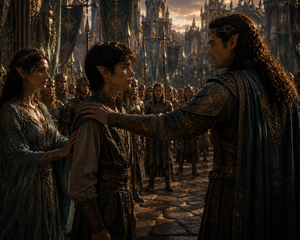 Darrian entered the High Lord’s military young by immortal standards, but already carrying the quiet discipline that had been shaped into him for years. By then, he was known far more for his connection to beasts than anything else. He understood animals with unnatural ease, moved through wilderness as though he belonged to it, and possessed the kind of patience and awareness that made him valuable long before anyone considered him dangerous. To most, he appeared controlled, steady, and reserved. He was a capable young High Fae male from the Summer Court with unusual instincts and a strong enough disposition to survive military life. And for a time, that was all he was believed to be.
The military trained him as it trained all soldiers: discipline first, instinct second. Formation drills beneath the heat of the Summer Court sun. Endless combat exercises until movement became reflex rather than thought. Long days spent learning not only how to fight, but how to endure. Darrian adapted quickly. He was observant, difficult to provoke, and frighteningly calm under pressure. The kind of soldier commanders noticed without fully understanding why.
But the shadows noticed first. He had spent years learning to keep them restrained, to avoid drawing attention to what lived beneath his skin. In the forests and along the coastlines of his youth, that control had been manageable. Military life was different. Emotion was built there constantly. Frustration, exhaustion, aggression, competition all fed the thing he had spent years keeping quiet. The shadows responded to pressure the way water responds to a rising tide: gradually, then all at once.
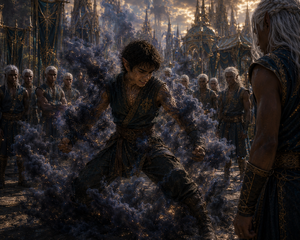 At first, it was subtle enough to dismiss. Corners darkening when he grew agitated, movement where there should have been stillness. Shadows that stretched unnaturally toward him during combat drills before snapping back into place. A few soldiers noticed, though most chose not to speak on it openly. The Summer Court was not unfamiliar with unusual magic, and Darrian himself remained controlled enough that it could still be ignored. Until it couldn’t. The moment that changed everything did not happen in battle, but during training. Weeks of pressure had built into something sharp and relentless, and during a particularly brutal sparring exercise, his restraint finally slipped. Not fully, never fully, but enough. The shadows reacted instantly to the surge of emotion beneath his control. They rose around him without command, darkening the training grounds in living movement, twisting and gathering at his feet and shoulders as though responding to an instinct older than language itself.
The entire ring stopped. Not just because of shock and fear alone, but because everyone present understood immediately that this was not ordinary magic. Darrian regained control quickly, but the damage had already been done. Word spread through the military faster than he could contain it, eventually reaching those within the Court trained to recognize what they had seen. A beast master could be explained, but a shadowsinger could not be overlooked.
From that point forward, his path within the military changed entirely. He was pulled from standard training and placed into specialized instruction designed specifically for abilities like his. The focus shifted from open combat to control, concealment, information gathering, infiltration, and the delicate balance required to wield shadows without allowing them to wield him in return. It was no longer enough for him to simply survive the military. He was now being shaped into something the Summer Court rarely produced and never treated lightly. He was something useful, something dangerous. Something that operated best where no one else could see him. -
The First Cut
The discovery of Darrian’s shadowsinger abilities changed the course of his life almost immediately. Once the military understood what he was, the attention around him sharpened in ways he could feel without anyone needing to say it aloud. Shadowsingers were rare enough on their own, but within the Summer Court, such abilities raised immediate questions. The general overseeing his new training did not begin with Darrian himself. He began with his bloodline, and the first question anyone had was: Where had the abilities come from? The question followed him constantly after that. It was quiet at first. But extremely persistent. Darrian gave the answers he had. His mother was Summer Court born and bred. His father was a merchant from elsewhere, nothing more. But even speaking it aloud seemed to deepen the scrutiny rather than satisfy it. The shadows did not belong naturally to the Summer Court in the way water or tide-bound magic did, and those within the military knew it. So did his father.
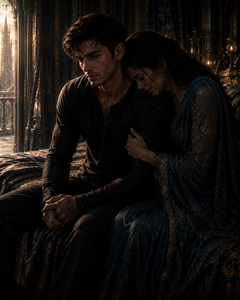 When Darrian returned home that evening and explained what had happened, his father’s reaction was immediate, though carefully restrained. Beneath his calm exterior was something unmistakable. Nervousness, tension, the kind of fear that sits just beneath the skin no matter how hard someone attempts to hide it. But he did hide it. He hid it exceptionally well as he moved through the evening as he always had, speaking normally, eating with them, carrying on the quiet routines of home as though nothing had changed. Only later would Darrian understand that his father had been preparing to leave the entire time, for by morning, he was gone. There was no explanation, or warning, or even a note left upon their table. There was nothing...but absence. And that absence shattered something inside the household almost instantly.
His mother took it the hardest. The grief that settled into her was not loud or dramatic. No, it was worse than that. It was quiet devastation. The kind that hollowed her from the inside out in ways Darrian could see every single day afterward. His father had not simply been someone she loved. He had been woven into the structure of their life so completely that his absence touched everything. Empty spaces at meals. Silences where laughter used to live. Rooms that suddenly felt too large.
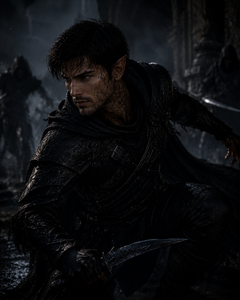 And for Darrian, the damage cut deep in a different way. At first, it was grief. Pure and bewildered and painful. His father had been central to his life. He had been the one who taught him the forests, the oceans, the patience required to approach living things without fear. The one who shaped the steady parts of him. Darrian could not understand how someone who loved them so deeply could vanish without even saying goodbye. Then, over time, the sadness became anger. It was not a sudden, bursting rage, but something slower and sharper. Every time he saw what it had done to his mother, that anger deepened. Every time the silence stretched through the house. Every unanswered question. Every moment spent wondering why. He wanted to hate him for leaving. Part of him did. But another part, some stubborn, wounded part, kept holding onto the belief that he would return someday, if only for his mother’s sake. He never stopped hoping entirely. But hope did nothing to stop the damage.
Darrian threw himself into his studies, his military training, and eventually his shadowsinger instruction with a kind of relentless intensity that bordered on self-destruction. If he was awake, he was training. If he was exhausted, he pushed harder. Discipline became less about ambition and more about survival. It became something to fill the hollow space abandonment had carved into him before it swallowed him whole. Because even as he got older, beneath every accomplishment, every promotion, every sharpened skill, there remained the same quiet question that follows abandoned children no matter how old or strong they become: Why wasn’t I enough for him to stay? -
Into the First
For the next eighty years after his father vanished, Darrian buried himself in discipline so completely that it became impossible to separate the male from the purpose he had built around himself. He trained relentlessly within the Summer Court military, honing every part of himself until instinct replaced hesitation. As a soldier, he became precise, dependable, and exceptionally difficult to break under pressure. As a shadowsinger, he learned control. Not just over the shadows themselves, but over the emotions that fed them. And beyond all of it, he continued to sharpen the abilities his father had first nurtured within him, deepening his connection to beasts and the wild places of Prythian until the bond between them felt almost instinctive.
 Over time, that connection evolved into something far beyond simple affinity. Darrian developed a rare psychic link with non-humanoid creatures, one that allowed him to sense through them in fleeting impressions rather than spoken thought. Birds carried movement and vision from high above coastlines and battlefields alike. Sea creatures moved through currents beneath ships and harbors unnoticed, feeding him fragments of the world beyond visible reach. Dolphins, otters, sea turtles, panthers, wolves, hawks, all creatures of ocean, forest, and sky alike became part of an unseen network woven quietly into his life. He did not command them as a master would command servants. The connection was built instead on trust, instinct, and mutual recognition, a bond that allowed information to move through places no ordinary spy ever could. It was during those decades that he became invaluable to the Court.
Darrian excelled in the spaces most others could not navigate. Information gathering, reconnaissance, silent movement across borders and territory, he developed a reputation for returning with answers when others returned empty-handed. Much of what he knew came not from interrogation or surveillance, but from the living world itself. A hawk circling too long above a shoreline. Dolphins abandoning waters near hidden ships. Wolves driven from territory by movements deeper within the forest. The military relied heavily upon him, not only because of what he could do, but because of the steadiness with which he did it. He followed orders without complaint, adapted quickly, and rarely allowed personal feeling to interfere with the work expected of him. Outside of the military, his life narrowed almost entirely to his mother. Whatever warmth remained in him was reserved largely for her, and much of what drove him during those years was the quiet determination to ensure she would never again lose stability because someone chose to leave.
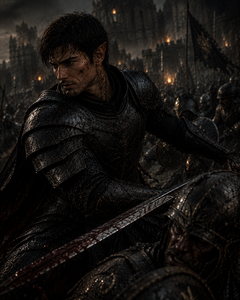 Then came the first Hybern war. Darrian fought alongside both the Summer Court and the Night Court during the conflict, witnessing firsthand the rare unity that formed between courts when survival demanded it. For a time, it seemed as though the war might change something fundamental within Prythian, that shared loss and shared battle might erase some of the divisions that had existed for centuries. Soldiers bled beside one another regardless of court, alliances held under pressure, and for brief moments, the boundaries between territories felt less important than the simple fact that everyone was trying to survive the same war.
But when the fighting ended, that unity did not last. Instead of dissolving old divides, the aftermath seemed only to sharpen them again. Courts withdrew back into themselves, rebuilding their own borders, their own priorities, their own distrust. Whatever closeness war had forced into existence faded quickly beneath politics, history, old loyalties, and a new wall. Darrian returned from the conflict older in ways that had little to do with age itself, carrying the understanding that survival beside someone did not necessarily mean belonging beside them once the battle was over.
And so he continued as he always had. He trained. He obeyed orders. He sharpened every ability he possessed until they became second nature. Years turned into decades, and decades into centuries, with Darrian remaining exactly where the Court required him to be: soldier, shadowsinger, intelligence gatherer, weapon. Steady. Reliable, and useful. He was always moving, while never truly stopping long enough to ask himself whether there had ever been anything else waiting for him beyond the work. -
Under The Mountain
When Amarantha seized the courts, Darrian’s first instinct was to fight. Like many within the Summer Court military, he reacted immediately to the shift in the room. The wrongness of it, the sudden understanding that what was unfolding was not diplomacy, but a takeover. Shadows rose instinctively at his edges, ready to answer violence with violence. But before he could move, before steel could even fully clear its sheath, the High Lord stopped him. The order was direct and unmistakable: do not react. And so he didn’t.
Like the rest of Prythian’s courts, Summer was taken not through open battle, but through restraint forced upon them before resistance could truly begin. Darrian entered Under the Mountain alongside his Court carrying all the instincts of a soldier and shadowsinger, only to find himself trapped in a place where survival depended upon stillness rather than action.
For the first decade, nothing happened. The courts waited in silence, watching, measuring, hoping the Spring Court would fulfill the conditions placed upon them and end Amarantha’s reign before bloodshed became necessary. Resistance remained largely unspoken during those early years. Trust between courts was fragile at the best of times, and Under the Mountain allowed little room for alliance or secrecy beneath Amarantha’s constant gaze. Every movement felt monitored, and every conversation carried risk.
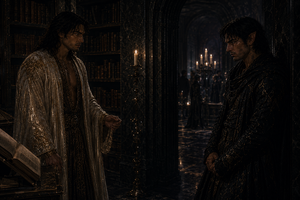 By the second decade, that silence began to crack. Grumbling spread quietly between courts, frustration and desperation growing beneath the surface as it became increasingly clear that hope alone would not free them. But even then, action came slowly. Fear remained stronger than trust for many years, and building anything beneath Amarantha’s control required impossible caution. Information had to move in fragments, concealed within fleeting conversations and carefully timed interactions. Details were difficult to confirm, and plans even harder to form.
Eventually, however, trust began to grow between three courts in particular: Winter, Day, and Summer. It was cautious at first, built less on faith and more on shared understanding. Each court had suffered beneath Amarantha’s rule, and each understood that waiting indefinitely would only tighten her control further. Darrian became central to that fragile alliance. As a shadowsinger, he was uniquely suited to moving information where others could not, slipping details between courts through observation, timing, and the unseen spaces others overlooked. Much of that coordination passed between Darrian and the Day Court emissary, who worked closely together to gather and exchange intelligence before quietly feeding it back to Winter. For years, the conspiracy grew in pieces.
And then, in the forty-ninth year, when it became undeniable that Spring would never meet the conditions required to break Amarantha’s hold, the uprising finally moved forward. And it failed catastrophically.
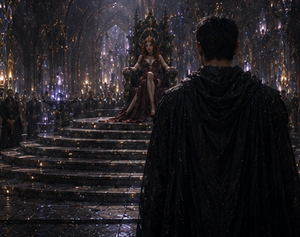 The rebellion was crushed before it could truly gain momentum, dismantled beneath Amarantha’s overwhelming control and the fractures that still existed between courts despite their efforts. What followed was not simply punishment, but devastation designed to make an example of those involved. For Darrian, he had been one of the primary conspirators behind the movement of information between the courts. He had helped build the trust that allowed the plan to exist at all. And when it collapsed, he carried the weight of that collapse directly onto himself. In his mind, it was not simply a failed rebellion, it was his failure. His information had not been enough. His caution had not been enough. When Amarantha began searching for someone to blame publicly, the attention eventually turned toward him. Rather than execute him outright, she chose something crueler. Amarantha claimed Darrian for herself, forcing him into the role of her personal shadowsinger as a deliberate display of control. It was meant to humiliate not only him, but every court watching. Even shadowsingers, as rare, elusive, and difficult to contain as they are, could be collared beneath her rule. Darrian endured it believing, at least briefly, that allowing himself to be punished in this way might spare his High Lord further suffering.
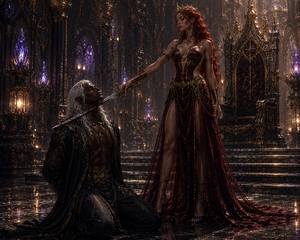 It did not. Amarantha executed the High Lord regardless, forcing Darrian to witness it firsthand. That moment shattered something in him that years of war and violence never had. The guilt he already carried deepened into something heavier, colder, and far more difficult to escape. For much of the remainder of Amarantha’s reign, Darrian existed in a state that bordered on numbness, moving through duty and survival without certainty that he would ever truly recover from what had been done, not only to his Court, but to the people he had failed to save.
And yet, when her reign finally ended, he still returned to the Summer Court. Because despite everything, despite the loss, the guilt, and the damage left behind beneath the Mountain, some part of him still belonged to the sea he had once spent his life trying to protect. -
Adriata's Attacks
When Darrian returned from Under the Mountain, the Summer Court was not the only thing that had changed. Everything he had once been connected to was gone.
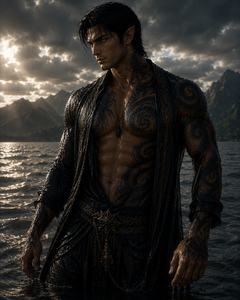 For nearly fifty years, he had been cut off entirely from the world beyond Amarantha’s control, and the bonds he once carried with the creatures of the sea, sky, and wild had not survived the separation. The hawks that once circled familiar coastlines were long dead, generations replaced by offspring that did not know him. Dolphins no longer recognized the presence beneath the water they had once trusted instinctively. The wolves, panthers, and creatures deeper within the forests had moved on without him, their bloodlines continuing while he remained trapped beneath stone and darkness. The psychic network that had once felt as natural as breathing had vanished almost completely.
Rebuilding it was not simple. Those bonds had never been based on command. They were built through years of patience, familiarity, and trust. He could not simply return and reclaim them. He had to start again from nothing, approaching creatures that no longer recognized him as part of their world. It was exhausting in ways even war had not been. Every failed connection, every animal that fled instead of stayed, felt like another reminder of time lost that he could never recover.
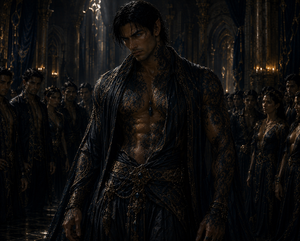 But worse than that was what waited for him within the Court itself. The people of the Summer Court who had not been trapped Under the Mountain did not fully understand what had happened there. They knew only fragments, the failed uprising, the execution of the High Lord, and the fact that Darrian had survived where others had not. Rumors spread quickly in the absence of truth, and blame settled easily onto the shadowsinger who had been so heavily involved in the rebellion. Some whispered that he had failed the High Lord. Others believed something worse: that Amarantha’s decision to keep him alive meant he had somehow betrayed the Court to save himself.
Those rumors reached his mother before they ever reached him. For forty-nine years, she had lived not knowing whether her son was alive, dead, or suffering somewhere she could never reach. The uncertainty hollowed her slowly over time, years of fear and helplessness carving deep fractures through the life she had once lived. By the time Darrian returned, she was already worn thin by grief and waiting. Hearing the whispers surrounding his role in the High Lord’s death pushed that fragile state even further, driving her into a downward spiral of heartbreak, anxiety, and exhaustion that Darrian could neither stop nor fully repair.
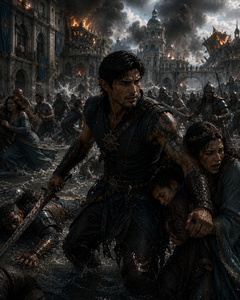 And still, he tried to continue serving the Court. He rebuilt what connections he could. He trained. He worked. He took on responsibilities exactly as he always had. But the world no longer responded to him the way it once did, and nowhere was that clearer than during the surprise attack on Adriata.
Before Under the Mountain, Darrian would have known long before the enemy arrived. The skies would have shifted unnaturally through the eyes of birds. Sea creatures would have avoided certain waters. Predators along the coastline would have reacted to movement before soldiers ever spotted sails on the horizon. His network of creatures had once functioned as an extension of the Court’s awareness itself. But those connections were gone.
And when Hybern struck Adriata by surprise, Darrian found himself blindsided alongside everyone else. For him, the attack did not feel like a single failure. It felt like confirmation of every fear already buried inside him. Another High Lord dead beneath his watch. Another Court caught unprepared. Another moment where what he once was capable of had not been enough to prevent disaster. The guilt he had carried out from Under the Mountain deepened further, feeding the growing belief that no matter how hard he trained, no matter how much of himself he gave to the Court, he would always arrive one step too late to stop the people around him from suffering. -
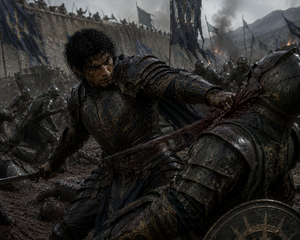 The second attack on Adriata shattered any remaining belief within the Summer Court that the conflict could still be contained to isolated strikes. By that point, the Court no longer felt as though it was shaping the war around it. It felt as though it was constantly scrambling to answer it. Every response came after damage had already been done. Every defense was raised only once the threat had revealed itself. Even victories felt reactive rather than decisive, as though the Court was spending more time trying to recover ground than truly holding it.
For Darrian, that feeling settled into something sharp and constant. Before Under the Mountain, the Summer Court had possessed layers of awareness that allowed it to anticipate movement before danger ever fully arrived. Information had once flowed through invisible channels, through spies, shadows, and the living network of creatures Darrian had spent centuries connected to. But after those fifty years of absence, much of that connection had been lost, and rebuilding it had proven painfully slow. The result was a Court that often found itself responding to Hybern rather than predicting it, forced to fight battles after the enemy had already gained position.
As Hybern’s forces increasingly moved through Summer territory, the Court became less a distant participant in the growing conflict and more a corridor being used to advance armies across Prythian itself. The coastlines that once symbolized openness and trade became militarized routes under constant watch. Shoreline skirmishes erupted regularly as Summer forces attempted to intercept movements along the sea, while deeper within the territory, soldiers were forced to push Hybern’s presence back out of places it had no business reaching. The fighting became relentless. It was not a singular warfront, but a constant series of clashes spread across waters, ports, forests, and roads.
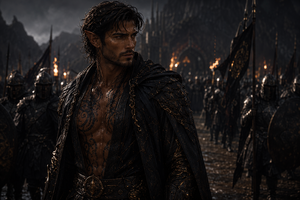 Eventually, much of that pressure pushed northward toward the borderlands between the Summer and Autumn Courts. Those borders became volatile almost overnight. Hybern’s forces moved aggressively through the middle territories, attempting to use the fractures between courts and the geography itself to their advantage. Summer and Autumn soldiers found themselves fighting in brutal stretches of land that neither side could fully afford to lose, intercepting movements before they could spread further inland. The terrain itself worked against them at times, trapping them in dense forests, uneven borderlands, or narrow passages where ambushes became common and visibility was limited.
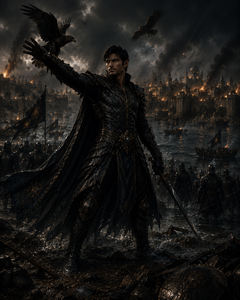 Darrian spent much of that time moving between fronts, operating where the fighting was heaviest while still trying to maintain some form of intelligence coordination beneath the chaos. But even there, despite the resistance, the war rarely felt controlled. Every battle won seemed to uncover another problem waiting behind it. Every successful interception revealed another force already moving elsewhere. The Court fought hard enough to survive, hard enough to keep pushing Hybern back where it could, but there remained a constant sense that they were always one step behind the larger tide of the war. There were victories. Small ones. Important ones. Enough to keep morale from collapsing entirely. A successful push back along the border. A reclaimed route through Summer waters. Forces driven back instead of allowed further inward. Those moments mattered because they gave the courts something desperately needed: proof that Hybern could still bleed, could still lose ground, and could still be resisted. But even those victories carried exhaustion beneath them. None lasted long enough to feel final. None created the sense that the war was truly turning in their favor. Instead, it always felt as though they were running, like they were holding lines long enough to regroup before being forced to move again.
By the time the second Hybern war fully erupted, the Summer Court had already spent years trapped in that cycle. Fighting. Rebuilding. Reacting. Enduring. The Court remained standing, but it did so under constant pressure, carrying the growing understanding that survival itself had become the closest thing to victory most of them could realistically hope for. -
The Second War
By the time the second Hybern war fully erupted, Darrian entered it carrying far more than duty.
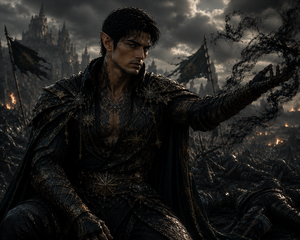 For him, the war became something deeply personal. It was a final attempt to reclaim everything he believed had been taken from him beneath the Mountain and in the years that followed after returning to the Summer Court. He threw himself into the conflict with the same relentless discipline that had defined most of his life, determined to prove that he was still capable, still useful, still worthy of the role he had once held so naturally. He wanted to believe he could still protect the people around him. That he was still a shadowsinger rather than the hollowed remnant of one. That the damage left behind by Amarantha, by failure, by loss, had not truly taken *him*.
So he fought wherever the Court required him. On land. At sea. Along coastlines and borders already worn raw by years of conflict. He followed orders without hesitation, moving from one front to the next with the quiet determination that if he simply endured long enough, fought hard enough, sharpened himself enough, he could somehow reclaim the parts of himself that no longer felt steady. Every battle became proof he was trying desperately to give himself: that he had not lost what made him dangerous, capable, necessary.
But the war proved otherwise. The Cauldron blast destroyed whatever remained of that illusion in a single instant. It struck with a force so catastrophic that there was no time to prepare for it, no strategy to counter it, and no skill capable of surviving it untouched. One moment there had been soldiers, movement, battle. Then the next, there was annihilation. Entire lives erased in the span of a breath. The force of the blast tore through the battlefield so completely that those caught directly within it were simply gone, incinerated by power too immense and too wrong to be understood. Darrian survived only because he had not been close enough to die. If he had been even half a step nearer, the blast would have consumed him entirely alongside the thousands it erased. Instead, he was caught just beyond the center of it. He was close enough to be struck by the Cauldron’s power without being granted the mercy of death itself.
And the Cauldron had touched him. The magic that tore across the battlefield was not natural magic. It did not move like ordinary power, did not feel like anything belonging to the world it existed within. It was ancient, violent, and wrong in a way his body seemed to recognize immediately. The impact threw him unconscious, but not before the force of it carved itself directly into him.
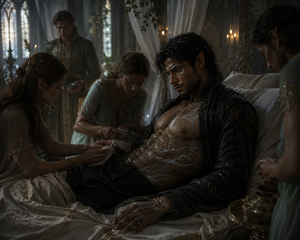 When he was eventually recovered and brought back to the Summer Court, the damage was impossible to ignore. Bright silver veining spread across the left side of his body, his ribs, chest, and back all fractured beneath the skin like cracks filled with living sea-glass light. The markings did not resemble burns or scars left by ordinary injury. They looked like something foreign had forced itself into him and remained there. But the physical damage was the least of what the blast had truly done.
Emotionally, mentally, something inside him collapsed completely. For centuries, Darrian had survived by containment. Guilt buried beneath discipline. Fear buried beneath duty. Failure buried beneath motion. Every loss, every death, every moment beneath the Mountain, every accusation, every war, he had locked all of it behind the same walls that allowed him to continue functioning no matter how much of himself it cost. The Cauldron blast shattered those walls instantly.
Everything came through at once at a blindly terrifying speed. The grief. The fear. The exhaustion. The guilt surrounding the High Lord’s death. The failures within the Summer Court. The years spent trying to prove he was still enough after his father abandoned him. The endless pressure of surviving when others had not. It crashed through him with a force equal to the blast itself, and whatever strength he once possessed to contain it simply no longer existed. The war did not just alter him physically. It broke him so completely that remaining within the Summer Court afterward became impossible.
When Darrian finally regained consciousness within a Summer Court healing hall, staring up at pale ceilings and hearing the distant sound of water beyond the city, he understood something with absolute certainty for the first time in his life that he was done. Not with life. Not even with survival. But with the Summer Court itself.
Whatever part of him had once belonged there had been left behind on that battlefield beside the Cauldron blast, shattered beyond anything the sea, the Court, or time itself could ever fully restore. -
The Middle
 After recovering enough to stand again, Darrian requested an audience with the new High Lord of the Summer Court. By then, there was little left of the male who had once entered the military centuries earlier with certainty still intact beneath his discipline. The Cauldron blast had left visible damage across his body, but the deeper wounds were harder to conceal. He no longer moved through the Court with familiarity or purpose. Everything felt distant from him now, its sunlight, its waters, even the city he had once devoted his entire life to protecting.
When he asked permission to leave, the new High Lord granted it. Not out of anger, nor exile, nor even punishment. But out of mercy. The new High Lord was known as a kind male, and perhaps he understood what others within the Court did not. He understood that Darrian was not simply wounded. He was exhausted in a way that no healer could mend.
By that point, even the relationship with his mother had fractured beneath the weight of everything surrounding them. She had spent decades trapped in fear, grief, rumor, and uncertainty, and though she loved her son, the years had damaged something between them that neither seemed capable of repairing. Every conversation circled the same wounds without healing them. The accusations surrounding him, the failures attached to his name, the things whispered throughout the Court, none of it left room for peace between them anymore.
So Darrian made the decision to leave without saying goodbye. Not because he hated her. Because he believed staying would only continue hurting them both. Along with her, most of the connections he had once relied upon were gone by then regardless. Some had died in war. Others no longer trusted him fully after everything that had happened beneath the Mountain and during the attacks on Adriata. The Court knew him as a shadowsinger, a soldier, and a survivor, but they did not know the truth of the bond he had once shared with the creatures of Prythian itself. They did not understand that the loss of those connections had crippled his ability to anticipate threats the way he once had.
So questions spread instead. If Darrian had once been so effective at gathering information, why had he failed to predict the attacks? Why had Hybern reached Adriata at all? Why had the Court been caught reacting rather than prepared? And eventually, beneath enough whispers, the questions became accusations. Some believed he had grown weak after Under the Mountain. Others questioned whether Amarantha’s control over him had left damage that could not be trusted. A few simply blamed him because someone had to carry the weight of failure, and Darrian had survived long enough to become an easy place to set it down.
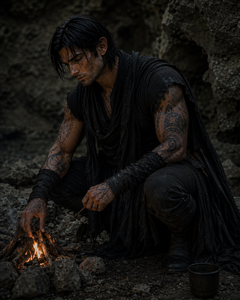 Combined with the damage already unraveling inside him, it became unbearable. The Summer Court no longer felt like home. It felt like a place filled with ghosts, expectations, and failures he could never outrun. Every street in Adriata carried memory. Every conversation carried doubt. Every glance felt like someone trying to decide whether he was still the male he once had been. Eventually, he stopped trying to prove that he was. Darrian left the Summer Court and disappeared into the Middle, retreating into the wild places between territories where borders mattered less than survival. The forests, mountains, and untamed stretches of Prythian became both refuge and punishment, a place where he attempted to rebuild the parts of himself that war, loss, and the Cauldron had stripped away.
And in doing so, he abandoned more than the Court. He abandoned the name tied to it. Darrian—the shadowsinger, the soldier, the conspirator, the survivor of Under the Mountain—became someone he could no longer carry without suffocating beneath the weight of everything attached to it. So he let the name die with the rest of what the wars had taken from him. And the male who remained became Braun instead.